| Hong Kong PrintsOnline Catalogue | Hong Kong Prints
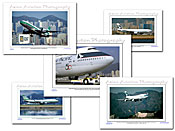
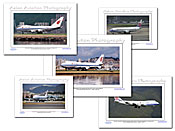
Founded by an American, Roy C Farrell, and an Australian, Sydney H de Kantzow, in Hong Kong in 1946, Cathay Pacific Airways started operations with a single war surplus C-47, which they nicknamed Betsy. The airline expanded rapidly in the following decades and by the new millennium it had become a highly focused and profitable airline, flying to a wide range of International destinations from it’s base in Hong Kong. Today Cathay operates a large fleet of A330, A340, B747-400, B777-200 and B777-300 aircraft.
|
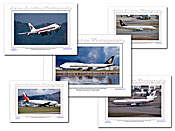
Hong Kong Dragon Airlines (now know as Dragonair), began operations in July 1985 with a single Boeing 737-2000 aircraft, flying to Kota Kinabalu, in Sabah, Malaysia. By 1993, when the first six Airbus A320’s joined the fleet, Dragonair were operating six Boeing 737-200 aircraft and had wet-leased a Lockheed L1011 Tristar from Cathay Pacific, who were, by then a major shareholder in the airline. Focusing mainly on Mainland Chinese destinations, Dragonair has continued to expand and now operates a large fleet of A320, A321 and A330 aircraft. In July 200 Dragonair began dedicated cargo services using B747 cargo aircraft.
|
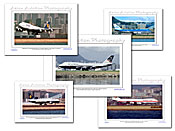
Air Hong Kong started operations in 1988, using a single B707 freighter. Over the next decade Air Hong Kong operated a number of Boeing 707 and 747 freighters. In 1994 Cathay Pacific bought 75% of the company and in 2002, they purchased the remaining 25%, making it a wholly owned subsidiary. Later, in 2002/2003, Cathay sold 40% of the company to DHL and Air Hong Kong took over DHL's routes within Asia Pacific. An order was placed for a number of Airbus A300-600 freighters, with Air Hong Kong being the launch customer for this aircraft.
By 2005 Air Hong was also operating six new and one leased A300-600 freighters, with another two due to join the fleet in 2006. Air Hong Kong has always operated aircraft with interesting liveries.
|
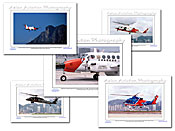
The Hong Kong Government Flying Services (GFS) came into being on 1 April 1993 following the disbandment of its predecessor, The Royal Hong Kong Auxiliary Air Force. As its name implies, GFS is a department of the Hong Kong Government. Its mission is to provide 24-hour search, rescue and aviation support services, including an emergency air ambulance service. The two BAe Jetstream aircraft are used as the search half of long-range search and rescue missions, directing the helicopters to the location as well as supporting Customs and Excise and the other disciplined services. The three Eurocopter Super Puma AS 332 helicopters and the four Eurocopter Dauphin EC 155 B1 helicopters have a number of roles, including search and rescue, Air Ambulance, Roadside Rescue, Fire fighting, Arial survey, Internal Security support for the Police and General Government Support, including VIP transport.
|
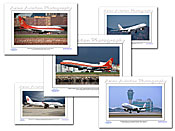
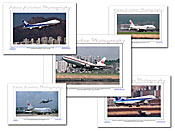
As is to be expected, a large number of Chinese airlines operate to and from Hong Kong, including airlines from both Mainland China and Taiwan. Amongst these are Air China, China Southern, China Eastern, China Northern, China Northwest and Xiamen Airlines from the mainland and China Airlines and Mandarin Airlines from Taiwan.
|
Being one of the main airport hubs in Asia, Hong Kong has seen and continues to see most of the major Asian airlines, which operate an equally wide range of different aircraft types. Available slots limited traffic at Kai Tak and so many of the newer Asian airlines were not seen there. However, no such restrictions affect the new international airport at Chep Lap Kok and a number of new entrants are to be found there.
|
In the 1980's and 1990's, when most of these photographs were taken, Hong Kong was well served with flights from Europe, with Aeroflot, Air France, Alitalia, Cargolux, KLM, Lufthansa, Martinair, SAS, and Swissair all operating scheduled flights.
|
The post war air links between Hong Kong and Japan have always been strong, with all three of Hong Kong's major airlines flying there and with Japan Airlines, All Nippon Airways and other Japanese airlines operating to Hong Kong. Those links remain strong and the airlines are as much in attendance at Chep Lap Kok as they were at Kai Tak.
|
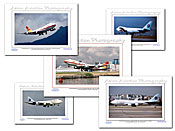
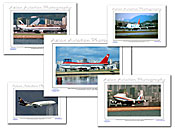
Some of the earliest air links between Hong Kong and the rest of the world were with North America, with Pan American Airways operating a scheduled flying boat service between San Francisco and Hong Kong from as early as 1937. Pan America continued to operate into Hong Kong until the airline failed in 1991. Delta operated into Hong Kong in the 1990's and United Airlines and Northwest Airlines remain there today. For a limited time, Varig, the Brazilian airline, operated both MD-11's and B747-400s to Kai Tak.
|
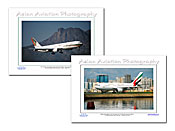
Both Gulf Air and Emirates have operated scheduled services to and from Hong Kong for many years now.
|
Founded by an American, Roy C Farrell, and an Australian, Sydney H de Kantzow, in Hong Kong in 1946, Cathay Pacific Airways started operations with a single war surplus C-47, which they nicknamed Betsy. The airline expanded rapidly in the following decades and by the new millennium it had become a highly focused and profitable airline, flying to a wide range of International destinations from it’s base in Hong Kong. Today Cathay operates a large fleet of A330, A340, B747-400, B777-200 and B777-300 aircraft.
|  |
Hong Kong Dragon Airlines (now know as Dragonair), began operations in July 1985 with a single Boeing 737-2000 aircraft, flying to Kota Kinabalu, in Sabah, Malaysia. By 1993, when the first six Airbus A320’s joined the fleet, Dragonair were operating six Boeing 737-200 aircraft and had wet-leased a Lockheed L1011 Tristar from Cathay Pacific, who were, by then a major shareholder in the airline. Focusing mainly on Mainland Chinese destinations, Dragonair has continued to expand and now operates a large fleet of A320, A321 and A330 aircraft. In July 200 Dragonair began dedicated cargo services using B747 cargo aircraft.
| |
Air Hong Kong started operations in 1988, using a single B707 freighter. Over the next decade Air Hong Kong operated a number of Boeing 707 and 747 freighters. In 1994 Cathay Pacific bought 75% of the company and in 2002, they purchased the remaining 25%, making it a wholly owned subsidiary. Later, in 2002/2003, Cathay sold 40% of the company to DHL and Air Hong Kong took over DHL's routes within Asia Pacific. An order was placed for a number of Airbus A300-600 freighters, with Air Hong Kong being the launch customer for this aircraft.
By 2005 Air Hong was also operating six new and one leased A300-600 freighters, with another two due to join the fleet in 2006. Air Hong Kong has always operated aircraft with interesting liveries.
| |
The Hong Kong Government Flying Services (GFS) came into being on 1 April 1993 following the disbandment of its predecessor, The Royal Hong Kong Auxiliary Air Force. As its name implies, GFS is a department of the Hong Kong Government. Its mission is to provide 24-hour search, rescue and aviation support services, including an emergency air ambulance service. The two BAe Jetstream aircraft are used as the search half of long-range search and rescue missions, directing the helicopters to the location as well as supporting Customs and Excise and the other disciplined services. The three Eurocopter Super Puma AS 332 helicopters and the four Eurocopter Dauphin EC 155 B1 helicopters have a number of roles, including search and rescue, Air Ambulance, Roadside Rescue, Fire fighting, Arial survey, Internal Security support for the Police and General Government Support, including VIP transport.
| |
As is to be expected, a large number of Chinese airlines operate to and from Hong Kong, including airlines from both Mainland China and Taiwan. Amongst these are Air China, China Southern, China Eastern, China Northern, China Northwest and Xiamen Airlines from the mainland and China Airlines and Mandarin Airlines from Taiwan.
| |
Being one of the main airport hubs in Asia, Hong Kong has seen and continues to see most of the major Asian airlines, which operate an equally wide range of different aircraft types. Available slots limited traffic at Kai Tak and so many of the newer Asian airlines were not seen there. However, no such restrictions affect the new international airport at Chep Lap Kok and a number of new entrants are to be found there.
| |
In the 1980's and 1990's, when most of these photographs were taken, Hong Kong was well served with flights from Europe, with Aeroflot, Air France, Alitalia, Cargolux, KLM, Lufthansa, Martinair, SAS, and Swissair all operating scheduled flights.
| |
The post war air links between Hong Kong and Japan have always been strong, with all three of Hong Kong's major airlines flying there and with Japan Airlines, All Nippon Airways and other Japanese airlines operating to Hong Kong. Those links remain strong and the airlines are as much in attendance at Chep Lap Kok as they were at Kai Tak.
| |
Some of the earliest air links between Hong Kong and the rest of the world were with North America, with Pan American Airways operating a scheduled flying boat service between San Francisco and Hong Kong from as early as 1937. Pan America continued to operate into Hong Kong until the airline failed in 1991. Delta operated into Hong Kong in the 1990's and United Airlines and Northwest Airlines remain there today. For a limited time, Varig, the Brazilian airline, operated both MD-11's and B747-400s to Kai Tak.
| |
Both Gulf Air and Emirates have operated scheduled services to and from Hong Kong for many years now.
| |
Online Catalogue | Hong Kong Prints |